Suniva Plans 564-Job Solar Manufacturing Facility in South CarolinaSuniva Plans 564-Job Solar Manufacturing Facility in South CarolinaSuniva Plans 564-Job Solar Manufacturing Facility in South CarolinaSuniva Plans 564-Job Solar Manufacturing Facility in South Carolina
April 16, 2026
Suniva, Inc. will create 564 jobs at a new solar cell manufacturing facility in Laurens, South Carolina, producing 4.5 gigawatts of panels annually.
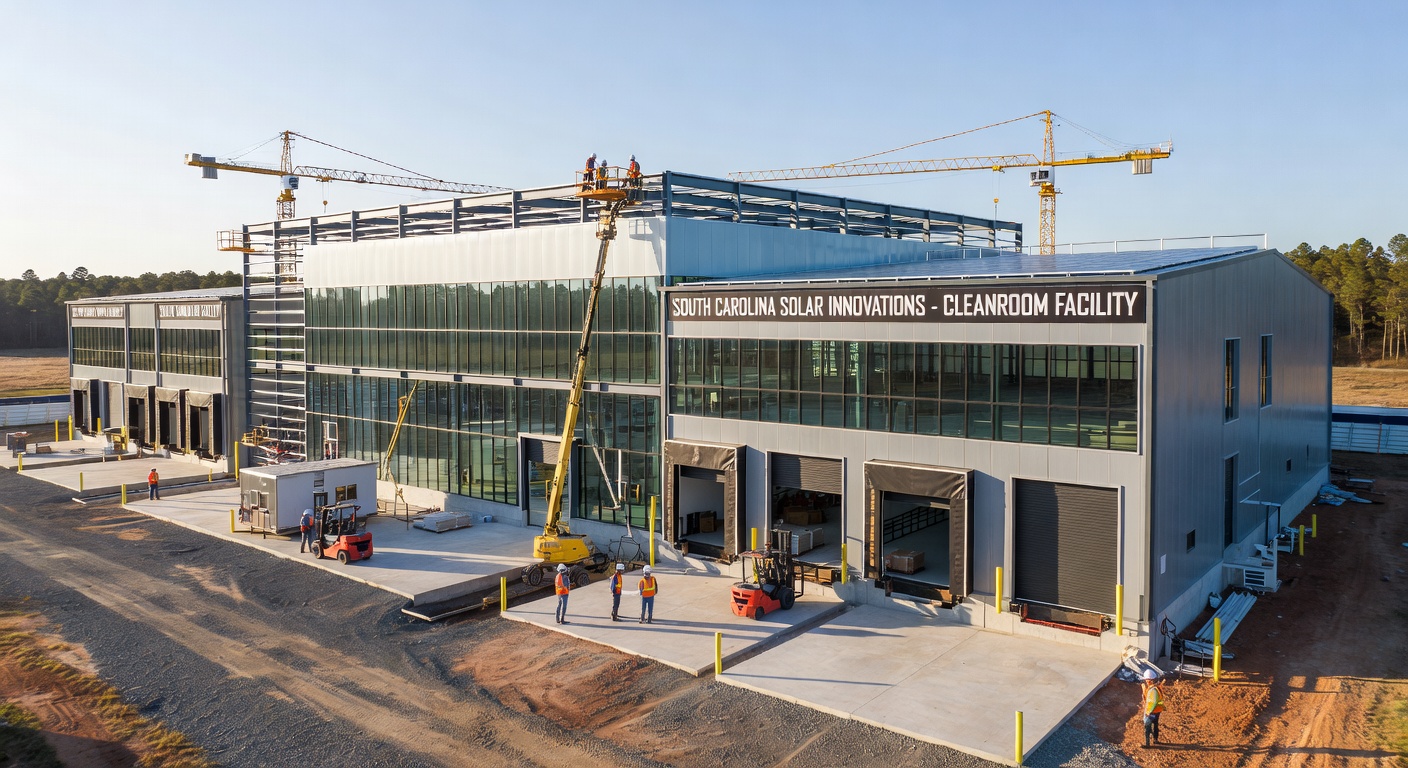
Suniva, Inc. will create 564 jobs at a new solar cell manufacturing facility in Laurens, South Carolina, producing 4.5 gigawatts of panels annually. The announcement positions the plant as a direct response to surging electricity demand from AI-driven data centers, reframing solar manufacturing as an energy security issue rather than an environmental one. As tech companies race to power generative AI infrastructure, domestic solar production has shifted from climate policy to national infrastructure priority.
The facility arrives at a moment when data center electricity consumption is outpacing grid expansion, forcing utilities and policymakers to reconsider how quickly new generation capacity can be deployed. Solar manufacturing is moving from the periphery of energy policy to its center, driven not by emissions targets but by raw demand growth.
What's New
Suniva, a Georgia-based solar cell manufacturer founded in 2008, announced plans for the 4.5-gigawatt manufacturing facility on April 15, 2026. The company filed for bankruptcy in 2017 and was a lead petitioner in the Section 201 trade case that resulted in the 2018 solar tariffs on imported panels. Its re-emergence as a domestic manufacturer at scale reflects the sharp reversal in U.S. solar industrial policy over the past eight years. The plant will produce solar cells (the semiconductor components that convert sunlight into electricity, distinct from finished solar panels) at a scale intended to serve utility-scale projects and distributed generation across the Southeast.
Matt Card, Suniva's president, framed the project as the next phase of South Carolina's advanced manufacturing evolution. "South Carolina already has a very rich history in advanced manufacturing. This is the next evolution for South Carolina, which is the next generation of advanced manufacturing and renewable energy," Card said. "As we go through this AI boom and the creation of data centers everywhere, we need to respond as a society to electrical generation needs and develop electricity quickly."
The 564 jobs represent a mix of production line workers, engineers, and supply chain roles. Laurens County, located northwest of Columbia, has historically hosted textile and automotive manufacturing; the solar facility signals a shift toward electrification infrastructure as legacy industries decline. Card's emphasis on speed reflects a broader challenge: AI model training and inference workloads are adding gigawatts of load to regional grids faster than traditional baseload plants can be permitted and built.
How It Works
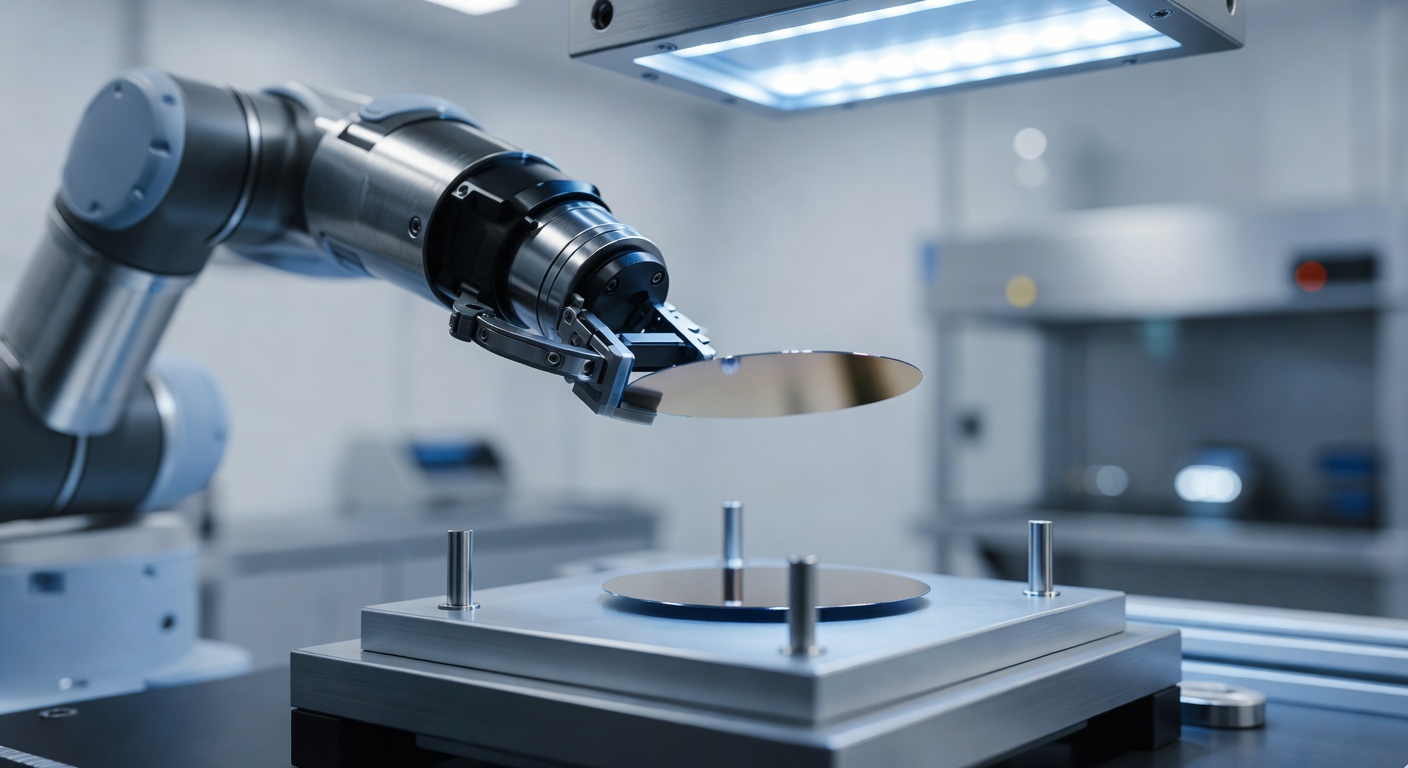
Solar cell manufacturing involves depositing thin layers of semiconductor material (typically silicon or newer perovskite compounds) onto wafers, creating the photovoltaic junction (the boundary where electrons are knocked loose by photons, generating current). Suniva's 4.5-gigawatt annual capacity translates to roughly 11 million individual cells, enough to power approximately 900,000 homes at peak output if deployed in utility-scale arrays.
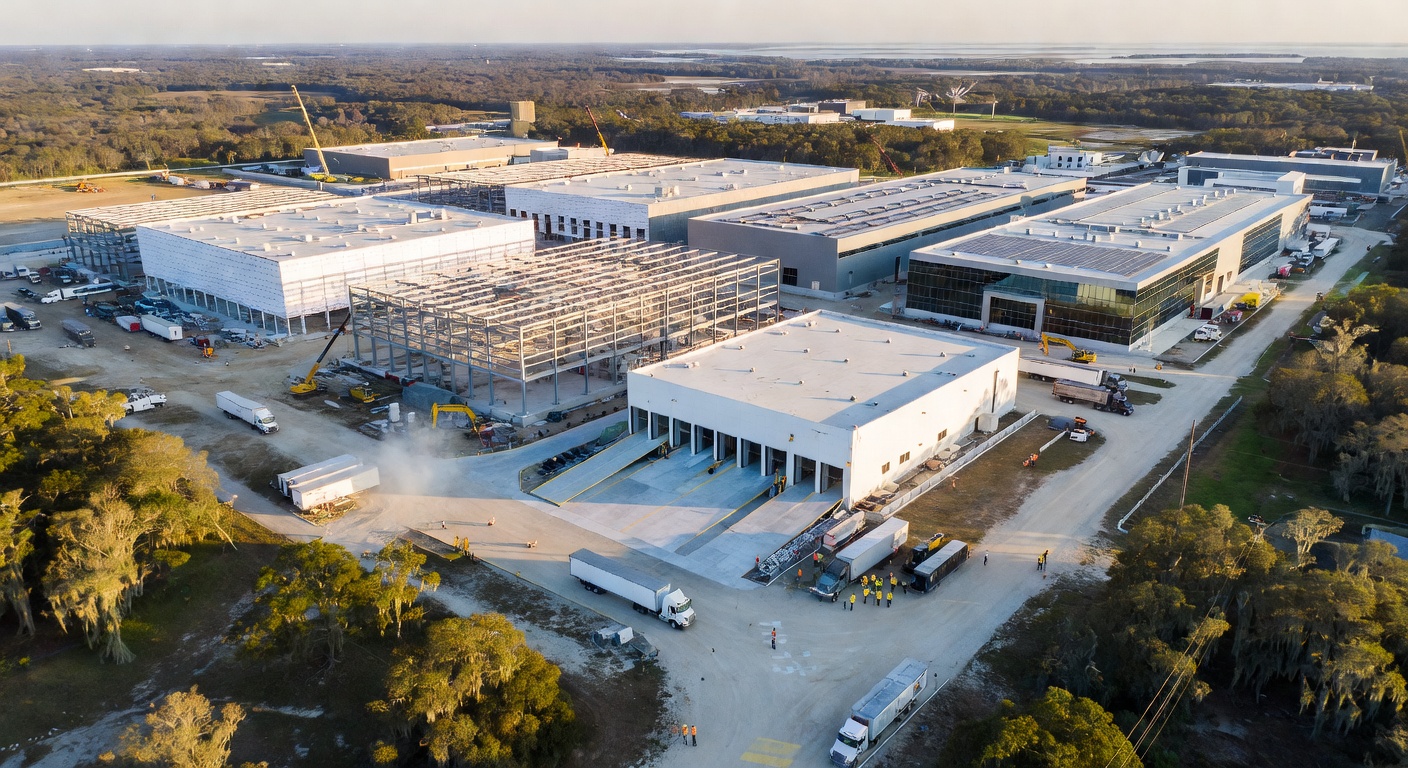
The facility's scale matters because gigawatt-level production (output measured in billions of watts) is the threshold at which domestic manufacturing begins to compete with imported cells on cost. Chinese producers currently dominate global supply, but tariffs and supply chain security concerns have created an opening for U.S.-based capacity, particularly when tied to Buy America provisions in federal infrastructure spending.
Data centers present a unique load profile: constant baseload demand with minimal variability, unlike residential or commercial buildings. A single hyperscale AI training facility can consume 100 to 300 megawatts continuously. Solar paired with battery storage (lithium-ion or emerging solid-state systems) allows developers to site generation near load centers without transmission bottlenecks, a key advantage in regions where grid interconnection queues stretch years into the future.
The Economics
The 564 jobs carry significant multiplier effects in Laurens County. Manufacturing roles in advanced sectors typically generate three to four indirect jobs in logistics, maintenance, and supplier networks. South Carolina has actively courted clean energy manufacturing with tax incentives and workforce training programs, positioning the state as a counterweight to traditional Sun Belt industrial hubs in Texas and Arizona.
Card emphasized energy independence as the core economic driver. "The country continues to use more and more energy; that's a fact no matter how that's being deployed," he said. "Whether it's to power our cell phones, our cars, homes or businesses, or data centers, we need more. The country needs to be energy independent, and we need to protect our domestic energy security."
This framing marks a shift from the environmental rationale that dominated solar policy in the 2010s. Energy security language resonates across political divides in ways that emissions reduction targets do not, particularly as electricity demand growth returns after two decades of flat consumption.
Solar's economic advantage lies in deployment speed and capital cost. New solar plants can be built in 12 to 18 months, compared to three to five years for natural gas combined-cycle plants and seven to ten years for nuclear reactors. Levelized cost of energy (the per-megawatt-hour cost over a plant's lifetime) for utility-scale solar has dropped below $30 in many U.S. regions, undercutting new coal and gas projects even without subsidies.
Competitive Landscape
Solar's speed advantage becomes critical as data center developers face pressure to bring capacity online before competitors. Permitting delays and supply chain constraints have made dispatchable generation (power sources that can ramp up on demand, like gas turbines) harder to deploy quickly, while solar with four-hour battery storage can now serve as pseudo-baseload in many contexts.
Coal and natural gas combustion generates particulate matter, nitrogen oxides, and sulfur dioxide (pollutants linked to respiratory disease, cardiovascular events, and premature mortality). The health cost externalities of fossil fuel generation, estimated at $50 to $80 per megawatt-hour by public health researchers, are rarely priced into electricity markets but increasingly factor into corporate sustainability commitments and shareholder pressure.
Nuclear remains the elephant in the room. New reactors offer zero-carbon baseload but carry construction cost overruns and decade-long timelines that make them impractical for near-term load growth. Small modular reactors (factory-built units under 300 megawatts) promise faster deployment, but none have reached commercial operation in the U.S. Solar's operational track record and falling costs make it the default choice for developers who need megawatts in months, not years.
The reality Card points to, rising total energy consumption, contradicts decades of efficiency-driven demand forecasts. AI workloads, electric vehicle charging, and industrial electrification are reversing the trend. Solar manufacturing like Suniva's facility bets that this demand growth is permanent, not a temporary spike.
What's Next
Suniva did not announce a construction timeline or expected operational date for the Laurens facility, leaving uncertainty about how quickly the 4.5 gigawatts of capacity will reach the market. The company's April 15 announcement focused on job creation and production capacity rather than project milestones.
The broader trajectory for U.S. solar manufacturing depends on whether domestic content requirements in federal procurement create sustained demand beyond the current AI-driven surge. If data center electricity growth slows or efficiency gains reduce per-computation energy use, the market for new solar capacity could soften, leaving facilities like Suniva's competing on price with Chinese imports once again.
Energy independence rhetoric, however, has bipartisan durability. As long as grid reliability concerns and geopolitical tensions around critical mineral supply chains persist, domestic solar manufacturing will find policy support. The question is whether 564 jobs in Laurens represent the leading edge of a reshoring wave or an isolated bet on a demand spike that may not last.
The AI boom's energy appetite has created a rare moment where climate goals, industrial policy, and energy security align. Whether that alignment persists beyond the current infrastructure cycle will determine if facilities like Suniva's become the norm or remain outliers.
The energy security framing Card deployed is savvy. It sidesteps culture war flashpoints around climate policy and pitches solar as a hard infrastructure play, the kind of project that survives political shifts. If data centers keep multiplying, that pitch gets stronger. If the AI buildout stalls, 4.5 gigawatts starts to look optimistic.
-- Raj Malhotra, Market Analysis Director
Sources: Suniva, Inc. · U.S. Energy Information Administration
More on Revuzia
India Adds 44.6 GW of Solar in One Year While US Falls Further Behind
SpaceX launches Cygnus XL with 11,000 pounds of cargo to ISS