USC Scientists Find Hidden Kidney Axis After a Decade of Missed SignalsUSC Scientists Find Hidden Kidney Axis After a Decade of Missed SignalsUSC Scientists Find Hidden Kidney Axis After a Decade of Missed SignalsUSC Scientists Find Hidden Kidney Axis After a Decade of Missed Signals
July 3, 2026
A team at the University of Southern California published a study in Science revealing that human kidney organoids have been missing a fundamental organizing axis -- one defined by proximity to the collecting duct (the tube that drains urine from the kidney) -- and that a
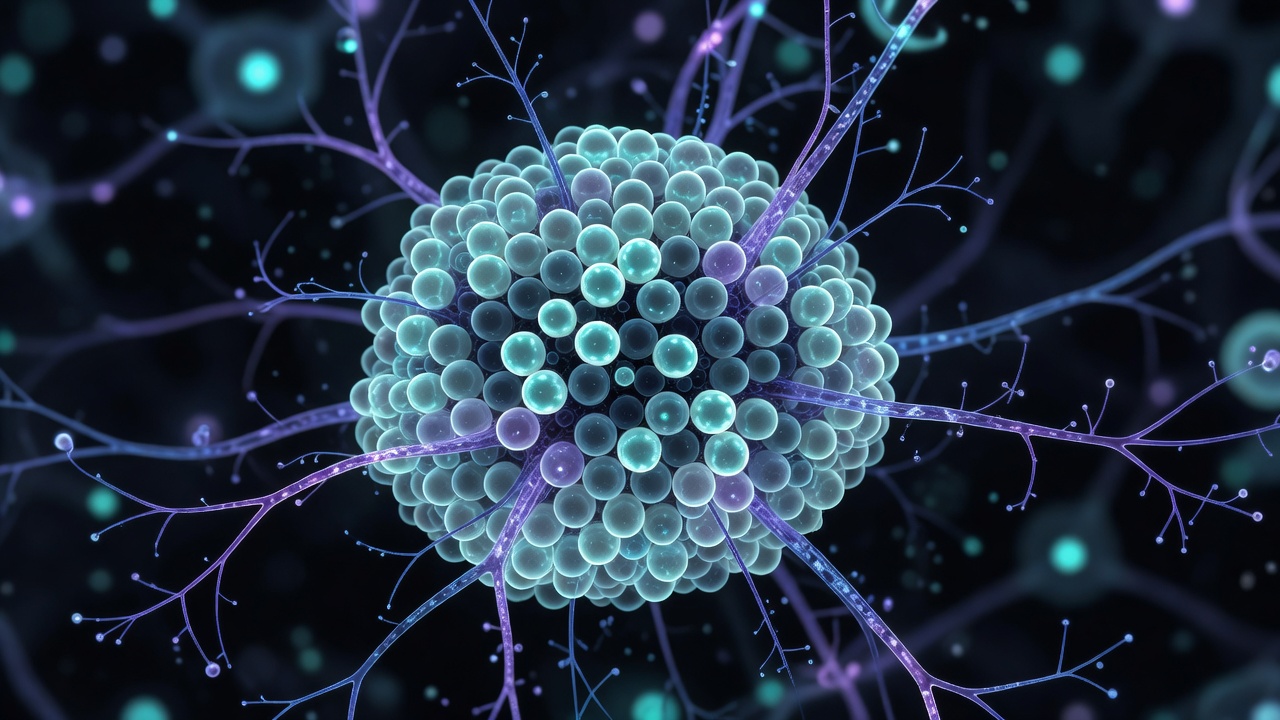
A team at the University of Southern California published a study in Science revealing that human kidney organoids have been missing a fundamental organizing axis -- one defined by proximity to the collecting duct (the tube that drains urine from the kidney) -- and that a cluster of engineered cells secreting a localized Wnt protein signal can restore it. The deeper finding is not the engineering feat itself, but what it exposes: a basic principle of human kidney development that went unrecognized for the entire decade the organoid field has been operating. Chronic kidney disease affects an estimated 8 to 16 percent of the world's population, and better lab models of how kidneys form and fail are the unglamorous prerequisite to everything that comes next.
The USC paper, titled "Patterning human kidney organoids with synthetic Wnt-secreting organizers," comes from collaborators at the Keck School of Medicine and the Viterbi School of Engineering. Co-corresponding authors Nils Lindstrom, PhD, an assistant professor in stem cell biology and regenerative medicine, and Leonardo Morsut, PhD, an associate professor spanning stem cell biology and biomedical engineering, led the work alongside postdoctoral researcher Fokion Glykofrydis, PhD, and graduate student Connor Fausto. The key experiment -- testing how a Wnt-secreting cell cluster would interact with organoid nephrons -- was proposed by Fausto, a detail the authors explicitly credit in the paper.
What the Research Found
The central finding is not about engineering at all. It is a developmental biology discovery. Using spatial transcriptomics (a technique that maps which genes are active at specific physical locations within a tissue, rather than averaging expression across the whole sample), the USC team identified a previously uncharacterized organizing axis in the developing human kidney. The classic framework recognizes one axis in the nephron: the proximal-distal (PD) axis, running from the blood-filtering end to the urine-drainage end. The new axis is defined by proximity to the collecting duct, a structure present in the developing kidney but absent from most laboratory-grown organoids.
"The study shows that there's an undiscovered axis that sets up how a nephron looks and forms. It's not every day that you find something new in human development at that level," said Lindstrom.
That gap in lab models turns out to matter structurally. During natural kidney development, the collecting duct continuously releases Wnt signals that instruct neighboring nephrons on both their cellular identity and their physical orientation. Standard kidney organoids, grown from human pluripotent stem cells (hPSCs) (stem cells capable of developing into any cell type in the body), contain nephrons but lack the collecting duct entirely. The result is organoids that develop with radially symmetrical, poorly oriented architecture, varying substantially from one culture to the next.

The synthetic organizer the team engineered is a small cluster of cells that secretes a specific Wnt protein identified through the spatial transcriptomics mapping as the relevant patterning signal. Introduced into an organoid culture, it restored the localized signaling field that the collecting duct would normally supply -- producing simultaneous control over cell identity determination and structural morphogenesis in a single intervention.
How the Science Works
The distinction between localized and uniform signal delivery is central to why this approach produces different results than prior methods. Over the past decade, organoid researchers have applied growth factors and signaling proteins in chemical baths that expose the entire organoid to the same concentration simultaneously. That approach worked well enough to generate nephron-containing structures, but it could not recreate the geometry of a real developing kidney, where signals emanate from a specific location and diminish with distance.
When the USC team introduced the Wnt-secreting synthetic organizer at a single point in the organoid, something unexpected emerged. Lindstrom described it: "A single, localized signal did two things at once. It changed what the cells became and physically pulled the tubules toward the source. You would not see that with a uniform chemical bath of signals."
The two simultaneous effects were: first, a bias toward distal nephron differentiation (pushing stem cells toward cell identities found at the urine-drainage end of the nephron); and second, directed nephron morphogenesis (the tubules physically elongated and oriented toward the Wnt source rather than growing outward in all directions equally). The elongation response is geometry-dependent and does not occur when the same signal is delivered uniformly.
Morsut described the engineering philosophy: "With our approach, we are trying to control self-organization, and work with it as opposed to try to completely override it." The synthetic organizer restores a missing spatial signaling input without requiring researchers to reconstruct the entire collecting duct lineage from scratch. The authors describe the approach as broadly applicable to other organoid systems where spatial signaling plays an instructive developmental role.
The paper's summary statement from Science captures the dual mechanism: "Introducing tunable WNT-secreting synthetic organizers (SOs) in organoids restored canonical WNT responses, biased distal nephron differentiation, and oriented nephron morphogenesis toward the WNT source."
What It Means for Patients
The path from a kidney organoid paper to a patient benefit runs through reproducibility. A kidney model that behaves differently each time it is grown cannot serve as a reliable preclinical test of a drug candidate or a disease mechanism. The current generation of kidney organoids has precisely that problem.
Improved structural reproducibility is what makes the USC advance clinically relevant in the near term. Lindstrom framed it directly: "It is important that we're starting to get good reproducibility from organoid models that can lead to robust preclinical models of cell function and disease to benefit patients."
The mechanisms by which underlying conditions such as high blood pressure and diabetes damage specific nephron structures are not fully understood at the cellular level. A kidney organoid that faithfully replicates the spatial organization of nephrons -- including the distinction between proximal filtering cells and distal drainage-connecting cells -- offers a more accurate substrate for studying those disease processes than models with disordered architecture.
Competitive Landscape
Independent analyst commentary specifically on this announcement was not publicly available at publication time.
The broader effort to build functional kidney tissue in the laboratory spans several parallel tracks, each pursuing a different architecture and end goal.
- KidneyX Prize program: A prize-winning approach targeted generation of functional artificial kidneys from stem cells using synchronized nephrons connected to synthetic organizers -- framing that overlaps with the USC approach in concept but targets a functional device outcome rather than a developmental biology model.
- USC Stem Cell (prior work): Reporting from September 2025 referenced prior USC Stem Cell work on building mouse and human synthetic kidneys. The two bodies of work are sequential advances from the same institutional base at Keck School of Medicine, not competing efforts.
- The Kidney Project (UCSF/Vanderbilt): This effort pursues an implantable biomedical device targeting end-stage kidney replacement -- a distinct engineering track from the USC organoid work, which targets preclinical disease modeling and developmental understanding.
The USC advance differentiates itself from all three adjacent tracks by centering on spatial patterning fidelity. The synthetic organizer is positioned as a modular tool that other labs can incorporate into existing organoid protocols.
The Road to Clinic
The gap between a reproducible kidney organoid and a transplantable or drug-validated tissue model remains substantial. The current work establishes spatial patterning control in vitro; it does not report transplantation experiments in animal models, and no clinical timeline is stated.
The authors' paper in Science frames the current contribution precisely: "Our findings link a spatial organizing geometry in the developing human kidney to controllable engineering in vitro." That link is the prerequisite for everything downstream, not the finished product.
Several benchmarks would need to be met before the approach could support preclinical drug screening. Quantitative reproducibility metrics -- variance in nephron count, structural similarity scores between independent cultures, consistency of proximal-distal cell type ratios -- are not yet reported. The community will need to evaluate the full technical protocol before adopting it broadly. Generating reproducible organoids at research scale also presents a different engineering challenge from producing them at the volumes required for drug screening campaigns.
What's Next
The discovery of a second developmental axis in the human kidney raises an immediate question the paper does not answer: are there additional spatial organizing principles that spatial transcriptomics has not yet resolved? The collecting-duct-proximity axis was invisible to the field for a decade because the collecting duct itself was absent from the models. Removing a structure from a model also removes the ability to detect what that structure was doing.
The synthetic organizer framework is not limited to kidney research. The USC team describes it as a modular tool applicable to other organ systems -- the intestine, lung, or liver -- wherever a missing signaling structure is the reason lab-grown tissue fails to organize faithfully. That positions this work as a platform advance rather than a single-organ result.
Within the kidney, the dual-axis discovery opens a more precise disease modeling agenda. Conditions that damage specific nephron segments -- including the distal tubule and collecting duct connections implicated in polycystic kidney disease -- could be modeled more faithfully in organoids that now correctly orient those structures.
For academic researchers and disease modelers in nephrology: the immediate practical value is a more faithful cellular substrate. An organoid that correctly biases distal nephron differentiation and orients tubules toward a spatial signal source more closely replicates the structural relationships a drug candidate would encounter in a real kidney -- reducing the probability that a compound effective in a disordered organoid fails for purely architectural reasons in a more structured model.
The most striking thing about this paper is the developmental biology finding hiding inside an engineering story. Researchers spent a decade building kidney organoids without knowing a fundamental axis of kidney organization existed. The synthetic organizer did not just fix a technical problem in cell culture; it revealed a blind spot in the basic science. That kind of discovery -- where the tool exposes the gap it was built to fill -- is rarer than a reproducibility improvement.
-- Zara Velez, Emerging Technology Editor
Sources: GEN Genetic Engineering and Biotechnology News · PMC / National Library of Medicine