Boston Dynamics' Atlas Lifts a Fridge — But the More Interesting Moment Is at 4:10Boston Dynamics' Atlas Lifts a Fridge — But the More Interesting Moment Is at 4:10Boston Dynamics' Atlas Lifts a Fridge — But the More Interesting Moment Is at 4:10Boston Dynamics' Atlas Lifts a Fridge — But the More Interesting Moment Is at 4:10
May 25, 2026
Boston Dynamics released a clip this week of Atlas, its electric humanoid, picking up and repositioning a mini fridge. Atlas weighs about 89 kilograms. The lift requires coordinate...
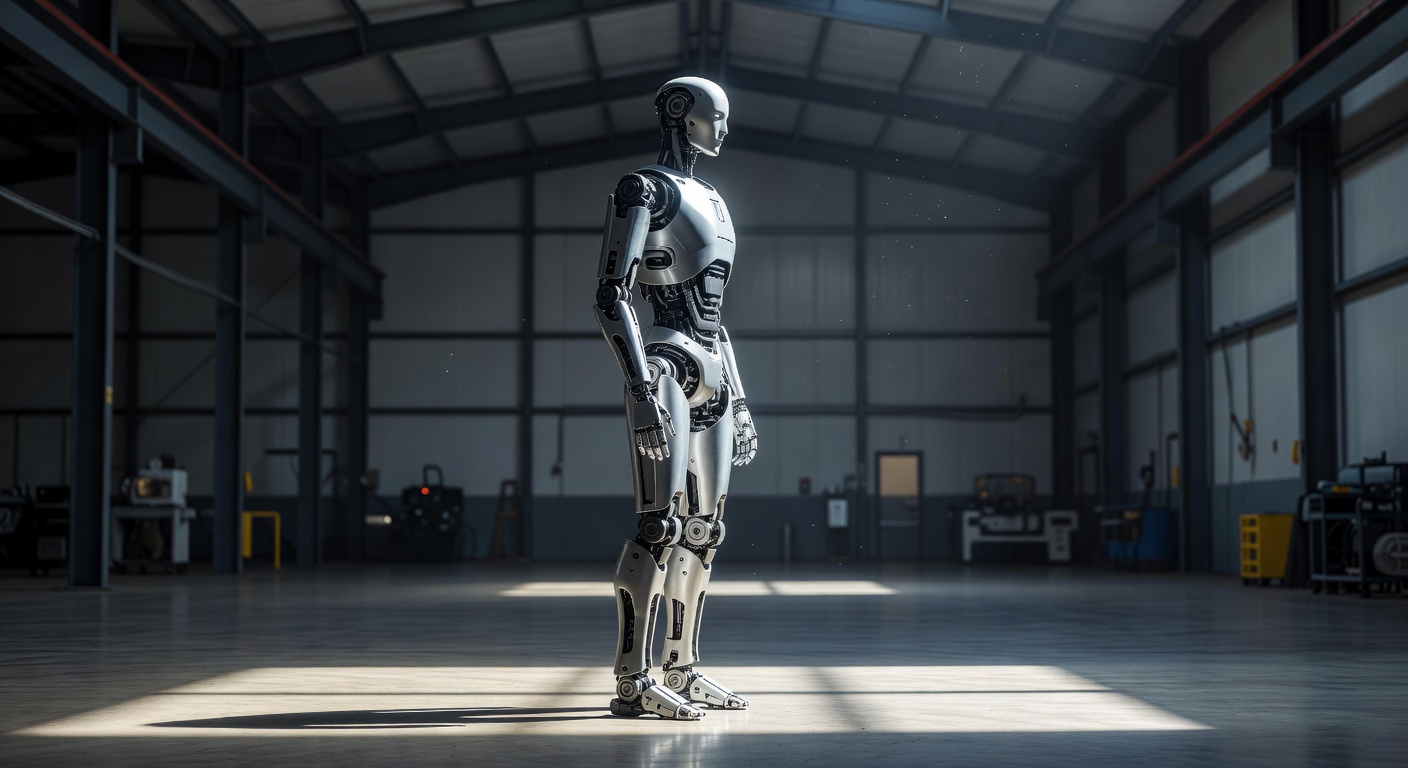
Boston Dynamics released a clip this week of Atlas, its electric humanoid, picking up and repositioning a mini fridge. Atlas weighs about 89 kilograms. The lift requires coordinated grip, dynamic balance, and continuous adjustment of joint loads — the kind of in-flight feedback factory robot arms have never needed because their tasks come pre-defined.
The company framed the clip as evidence the robot is ready for industrial work. IEEE Spectrum's senior editor Evan Ackerman picked a different moment to call attention to. In his Video Friday roundup, Ackerman flagged a separate motion at the 4:10 timestamp and called it more impressive than the fridge lift — without saying what it was.
That offhand line is the more useful signal from the week. Robotics venture funding crossed $40.7 billion globally in 2025, about 9 percent of all venture activity, and most of that capital is chasing the kind of unstructured, real-time manipulation Atlas is now showing publicly.
What changed
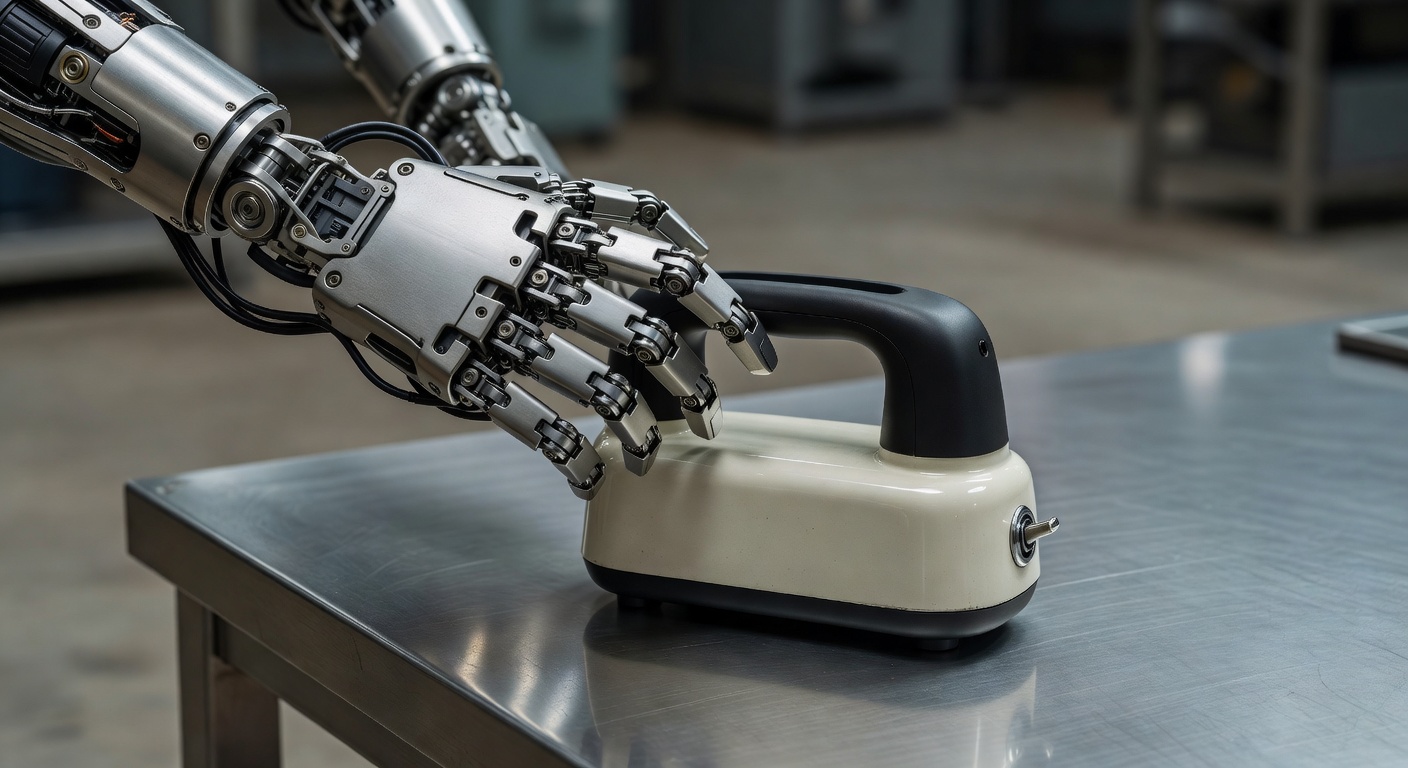
The fridge demo isn't notable because Atlas can lift the weight. Industrial robot arms have done that for decades at far greater payloads. What's new is the loop running underneath: real-time proprioceptive feedback, the robot's continuous internal sense of its own joint torques, limb positions, and contact forces.
That sensing is what lets a humanoid handle the things that defeat factory arms. A fridge whose weight is unevenly distributed. A grip that slips. A floor surface that shifts the balance point mid-lift. Open-loop execution against a pre-computed trajectory can't survive that variation. Closed-loop torque sensing can.
Boston Dynamics' own framing — "Just months after its debut, Atlas is proving why it is the world's most capable and dynamic humanoid robot, ready for real work" — is marketing copy. But the underlying claim, that the robot adjusts manipulation in real time based on what it feels, is the right metric for the field.
The 4:10 question
Ackerman's comment — "Watching Atlas move a fridge may be less impressive than whatever the heck it does at 4:10" — sits inside a roundup format that is evaluative rather than analytical. He did not elaborate. Earlier in the same Boston Dynamics video, Atlas executes a sequence with multiple joints rotating 360 degrees simultaneously, which Ackerman captioned "that's a lot of joints rotating 360 degrees at the same time." Whether the 4:10 motion is something dramatic or something subtle is a conversation Boston Dynamics started without finishing.
The commercial benchmark
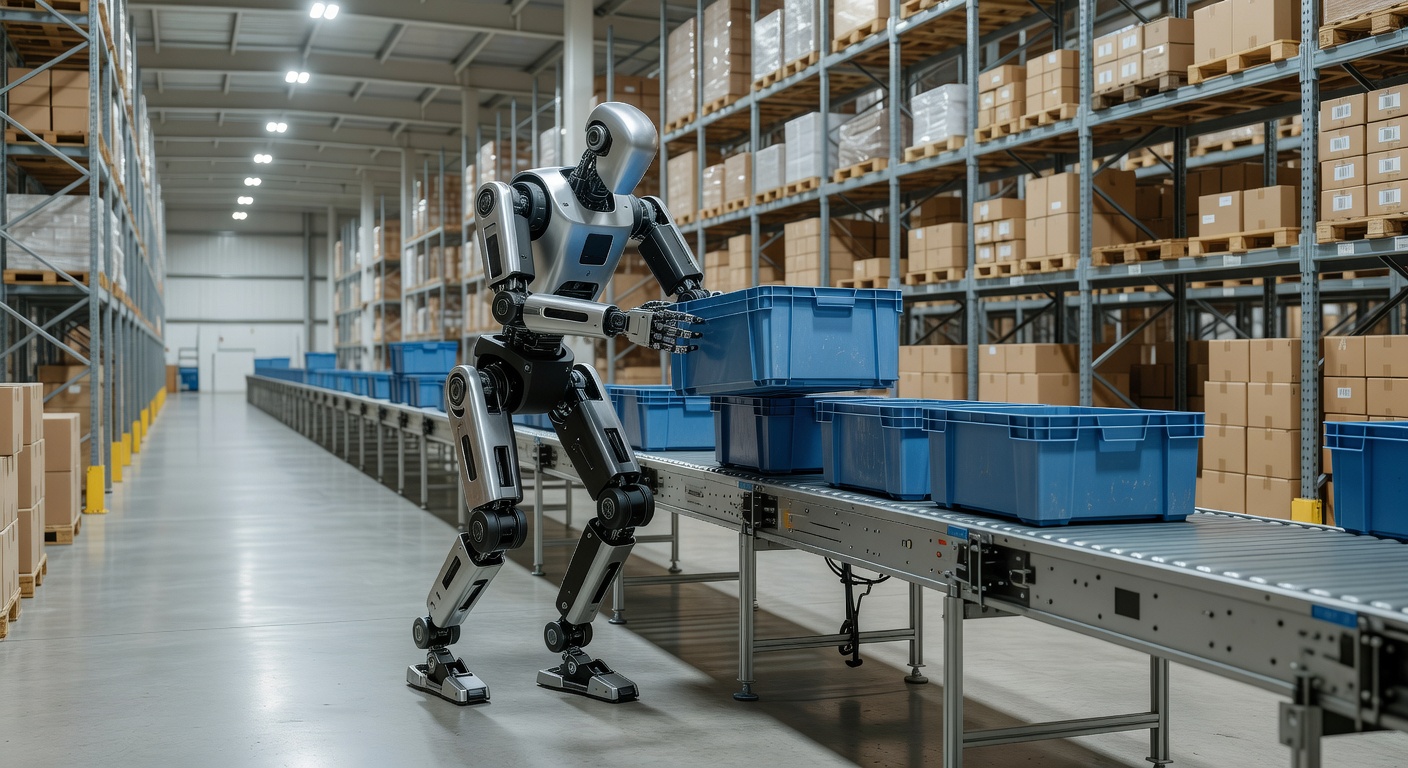
The honest comparison point for Atlas isn't another lab demo. Agility, formerly Agility Robotics until it dropped the second word from its name in March 2026, signed the industry's first humanoid Robot-as-a-Service contract with GXO Logistics in 2024 and now runs its Digit robot at a SPANX distribution facility outside Atlanta. Digit moves totes from cobots onto conveyors. It is, today, the closest thing to an operational humanoid in commercial logistics.
That's the bar. A robot that lifts one fridge once in a video is not a Digit at SPANX. A robot whose proprioceptive sensing holds up across hundreds of cycles per shift with varying loads might be.
The rest of the field
Figure AI introduced Figure 03 in October 2025 with tactile fingertip sensors that detect forces as small as 3 grams and cameras embedded in each hand — a direct play for fine-manipulation work. The company closed a Series C in September 2025 that exceeded $1 billion at a $39 billion valuation, the first round at that scale for a humanoid startup. Tesla is converting its Fremont plant from Model S production to first-generation Optimus assembly lines, with mass production targeted for late 2026.
The competitive question across these platforms is not which one wins a single demo. It is which one closes the gap between a video and a repeatable deployment at scale.
The open-source layer matters here too. The Robot Operating System, the modular framework that handles communication between a robot's sensors, actuators, and decision logic, has become the default infrastructure for both research and commercial work. Its current stable release, Kilted Kaiju, shipped in May 2025 and is supported through November 2026. Hugging Face, Nvidia, and Alibaba have each made substantial open-source robotics investments in the past two years, broadening the talent and tooling base around hardware platforms like Atlas.
Why next week matters
The Atlas demo arrives roughly a week before ICRA 2026, running 1-5 June in Vienna. ICRA is the largest technical robotics conference and the venue where capability claims get peer-reviewed by competing labs. RSS 2026 follows in Sydney 13-17 July. Hardware demos released ahead of major conferences usually function as positioning statements as much as technical disclosures; whether Atlas's proprioceptive feedback holds up under independent evaluation is the question the next two weeks will start to answer.
- ICRA 2026 — Vienna, 1-5 June 2026
- RSS 2026 — Sydney, 13-17 July 2026
- Summer School on Multi-Robot Systems — Prague, 29 July - 4 August 2026
- Actuate 2026 — San Francisco, 18-19 August 2026
For engineers
The Atlas demo reframes the benchmark from payload spec to sensing fidelity. The number to track is not maximum lift weight. It is the range of object and environment variation the robot handles without pre-programming. That is the figure that separates a controlled-demo robot from a warehouse-floor robot, and it is what Boston Dynamics will be measured against at ICRA and after.
Ackerman's roundup did the obvious thing — link to the fridge demo as the marquee item — and then suggested it wasn't actually the most interesting moment in the clip. That instinct is more useful than any of the marketing copy. The field moves fast enough now that the demo Boston Dynamics picks for the headline isn't necessarily the one the engineers should be watching.
— Zara Velez, Emerging Technology Editor
Sources: IEEE Spectrum, Video Friday