Waymo Buys Apple's Abandoned $220M Arizona Self-Driving Proving GroundWaymo Buys Apple's Abandoned $220M Arizona Self-Driving Proving GroundWaymo Buys Apple's Abandoned $220M Arizona Self-Driving Proving GroundWaymo Buys Apple's Abandoned $220M Arizona Self-Driving Proving Ground
June 9, 2026
Waymo paid $220 million for Apple's abandoned 5,500-acre self-driving proving ground in Wittman, Arizona, according to a deed recorded June 5, 2026 in Maricopa County. The seller was Route 14 Investment Partners LLC, a Delaware shell company associated with Apple, which had
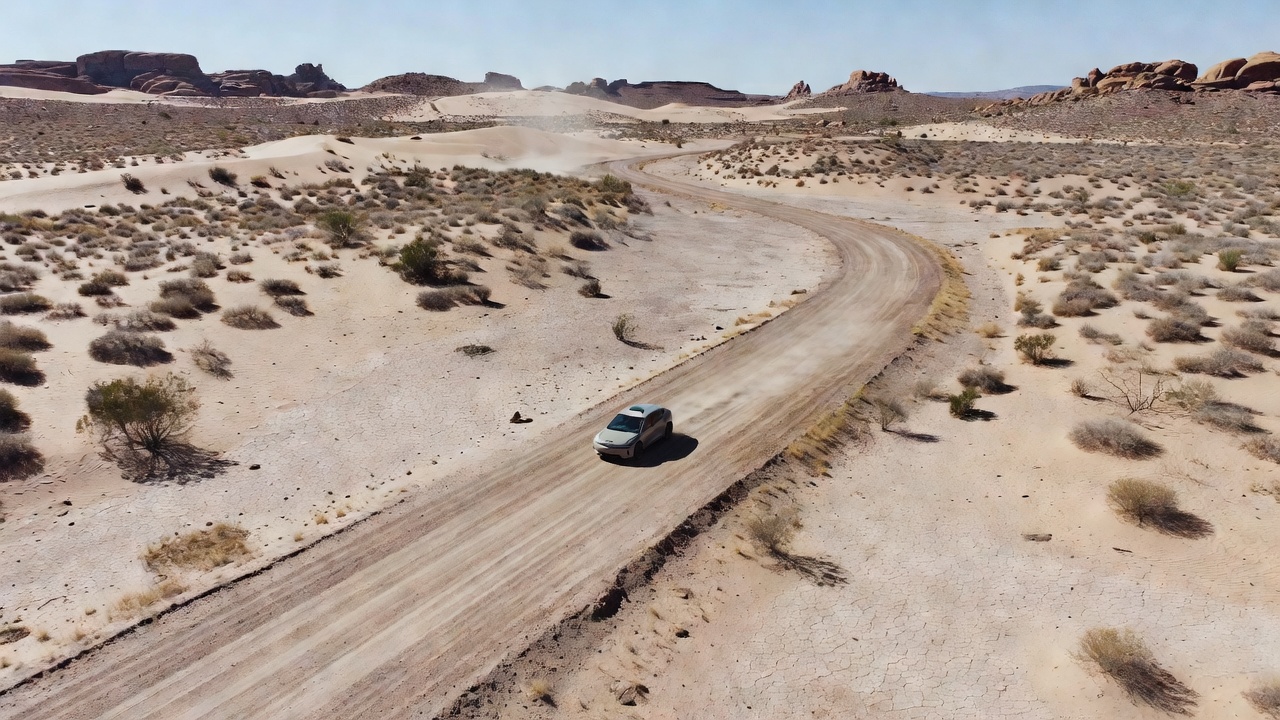
Waymo paid $220 million for Apple's abandoned 5,500-acre self-driving proving ground in Wittman, Arizona, according to a deed recorded June 5, 2026 in Maricopa County. The seller was Route 14 Investment Partners LLC, a Delaware shell company associated with Apple, which had originally bought the property for $125 million in 2021 to develop Project Titan, its decade-long autonomous vehicle program. Apple cancelled Project Titan in February 2024 after reportedly spending billions of dollars on the effort, and the property sat stranded. Now it belongs to the company that won the race Apple abandoned.
The transaction is more than a real-estate deal. It is a physical audit of who survived the autonomous vehicle shakeout of the early 2020s, when General Motors halted Cruise following a pedestrian collision investigation, and companies once valued in the tens of billions quietly dissolved their programs. Waymo, the Alphabet-owned autonomous driving subsidiary, currently operates a fleet of over 700 vehicles deployed for its ride-hailing service across multiple U.S. cities. The Arizona facility gives it testing infrastructure at a scale its existing closed courses could not match.
By owning the land where Apple's autonomous car dream was built and buried, Waymo now controls the largest private AV proving ground in its portfolio -- a tri-state testing footprint spanning California, Ohio, and Arizona, and a purpose-built environment designed to generate the edge-case data that robotaxi programs require before deploying untested vehicle variants at commercial scale.
What It Does
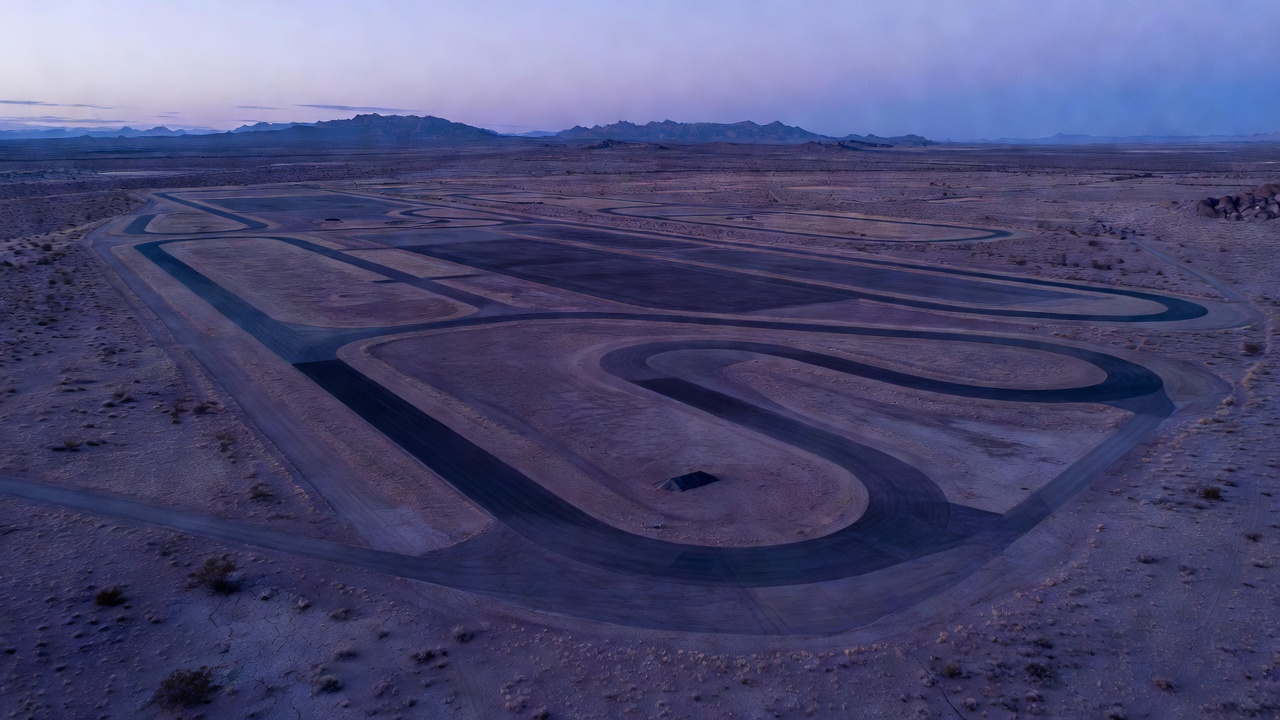
The Wittman facility is not a single strip of pavement. It contains four distinct testing environments spread across 5,500 acres of Arizona desert:
- A 115-acre city course with intersections, signage, and lane configurations replicating urban driving conditions
- A 35-acre vehicle dynamics area for testing handling limits, braking performance, and sensor response under controlled stress
- A four-mile oval track for high-speed sustained runs and repeatability testing
- A freeway course purpose-built for autonomous vehicle highway behavior testing
The facility was originally built for Fiat Chrysler to test vehicles and components in hot-weather conditions, taking advantage of Arizona's climate for thermal stress validation. Apple rented access before purchasing outright in 2021. The property then served multiple iterations of Project Titan prototypes before Apple's cancellation in February 2024.
A Waymo spokesperson confirmed the facility "will be used to simulate driving scenarios in a controlled environment to continuously test and improve the performance of its self-driving system." The company listed four planned uses: rider-only testing, motion control testing, operational training workflows, and future testing expansion. The spokesperson did not specify a timeline for when the Wittman facility becomes operational under Waymo's ownership.
The Technical Achievement
Purpose-built proving grounds serve a function that public road miles cannot: repeatability. When an autonomous system fails a scenario on a public street, recreating the exact conditions for root-cause analysis requires re-running the scenario in a controlled environment with the same road geometry, lighting, and surface conditions. A 5,500-acre private facility with four distinct course types allows engineers to define a scenario once and run it thousands of times without road closures, permits, or weather uncertainty.
For Waymo, the scale problem is concrete. The company currently operates close to 4,000 vehicles and has stated it wants to produce tens of thousands of robotaxis per year. Each new vehicle variant entering the fleet requires validation: the Zeekr vans (a Chinese automaker producing Waymo's new van, shipped to Arizona for hardware installation) and the Hyundai Ioniq 5 vehicles produced in partnership with Hyundai. Before any variant is cleared for rider-only deployment in a commercial city, it must pass a testing pipeline that includes motion control validation and scenario coverage across edge cases.
Waymo's two existing closed test courses -- the Castle Proving Ground in California and the Transportation Research Center in Ohio -- are both smaller than the Wittman site. The Arizona acquisition gives Waymo a tri-state test footprint and a facility that dwarfs both predecessors in acreage and course variety.
Waymo began AV testing in the Phoenix suburb of Chandler in 2017, making Arizona its first commercial market. Owning a private proving ground in the same state creates a closed loop: public road data from Chandler informs scenarios that can be replicated and stress-tested at Wittman before new vehicle variants are cleared for public deployment.
Real-World Impact

Waymo's commercial expansion is moving faster than its existing test infrastructure was built to support. The company now operates in more than 10 U.S. cities and is producing new vehicle variants through two separate manufacturing partnerships. The Zeekr van program and the Hyundai Ioniq 5 program represent two different vehicle platforms, each requiring independent safety validation and motion control testing before rider-only deployment.
The production math is the pressure point. Going from approximately 4,000 vehicles toward tens of thousands annually means the testing pipeline throughput must scale proportionally. A proving ground with a four-mile oval, a 35-acre dynamics area, and a 115-acre city course running in parallel can process multiple vehicle variants simultaneously -- a throughput advantage neither Castle nor the Transportation Research Center can match at the same scale.
The Wittman facility also enables a class of testing impractical on public roads: rider-only testing (runs without a safety driver present), where edge-case maneuvers can be executed without risk to the public. Waymo's spokesperson listed rider-only testing as one of the facility's four planned uses, signaling the site will serve as a pre-deployment clearance environment rather than purely a research setting.
Competitive Landscape
Apple's path through the Wittman facility traces the arc of the AV shakeout in miniature. The company bought the property in 2021 for $125 million, at a point when Project Titan had already reportedly consumed billions of dollars. When Apple cancelled Project Titan in February 2024 and redirected resources to generative AI, the Arizona proving ground became a stranded asset: purpose-built infrastructure with no remaining purpose for its owner, sold by the shell company Route 14 Investment Partners LLC to a buyer whose product was already in commercial service.
The Wittman property passed from Fiat Chrysler to Apple to Waymo across a span during which the competitive AV landscape contracted sharply. General Motors halted Cruise's operations in late 2023 following a California DMV permit suspension, then stopped funding the program entirely in December 2024. The facility's history now functions as a physical record of that contraction: built for traditional automaker testing, acquired by a consumer technology company pursuing an autonomous car that was never released, and purchased by the autonomous vehicle operator that remained in commercial operation. The property itself did not change. The industry around it did.
Independent analyst commentary specifically on this announcement was not publicly available at publication time.
What's Next
Waymo has not disclosed a timeline for when Wittman becomes fully operational, nor whether the Castle Proving Ground in California or the Transportation Research Center in Ohio will see reduced use. The spokesperson's reference to "future testing expansion" as one of the site's planned uses suggests the facility is being positioned as a long-horizon asset rather than an immediate replacement for existing sites.
The Zeekr van program, which ships vehicles to Arizona for hardware installation before commercial deployment, already positions the state as a manufacturing and assembly hub. Wittman adds validation capacity to that hub, creating an Arizona footprint that spans fabrication, outfitting, testing, and commercial operation in Waymo's oldest market. Owning test land outright also removes scheduling and access constraints that limit throughput at shared proving grounds -- a 5,500-acre facility under single ownership can be scheduled entirely around one company's validation pipeline.
For everyday riders in cities where Waymo operates: this acquisition means the autonomous vehicles dispatched by the app are validated against a 5,500-acre private test environment before entering your city's streets. As Waymo scales from roughly 4,000 vehicles toward tens of thousands annually, each new Zeekr van or Ioniq 5 entering the fleet passes through a proving ground running urban intersection scenarios, high-speed oval tests, and rider-only edge-case maneuvers simultaneously. More throughput at Wittman means Waymo can qualify new vehicle variants faster -- which means more cities, more coverage hours, and more available rides.
The most striking thing about this transaction is not the $220 million price tag. It is that the proving ground Apple built to test a car it would never sell is now the infrastructure Waymo will use to scale a service that already exists. One company spent years and reportedly billions of dollars building toward a product that was cancelled. Another bought the physical evidence of that effort and put it to work. That is a cleaner summary of where autonomous driving stands in 2026 than any market research figure could produce.
-- Zara Velez, Emerging Technology Editor
Sources: Waymo / TechCrunch (Kirsten Korosec and Sean O'Kane, June 8, 2026) · Maricopa County property records (public filing, June 5, 2026)